







How to choose motorcycle-friendly campsites for secure road trips
Publié le 30/08/2026
A successful motorcycle road trip depends on more than scenic roads and fuel stops. Your overnight location affects how securely you can leave the bike, whether your kit stays dry, and how rested you feel for the next day’s ride. Campsites can offer flexible, affordable accommodation, but a standard pitch is not always suited to a loaded motorcycle. Before booking, assess the ground, security, weather cover and practical facilities with the same care you give to route planning.
A motorcycle-friendly campsite starts with the right pitch
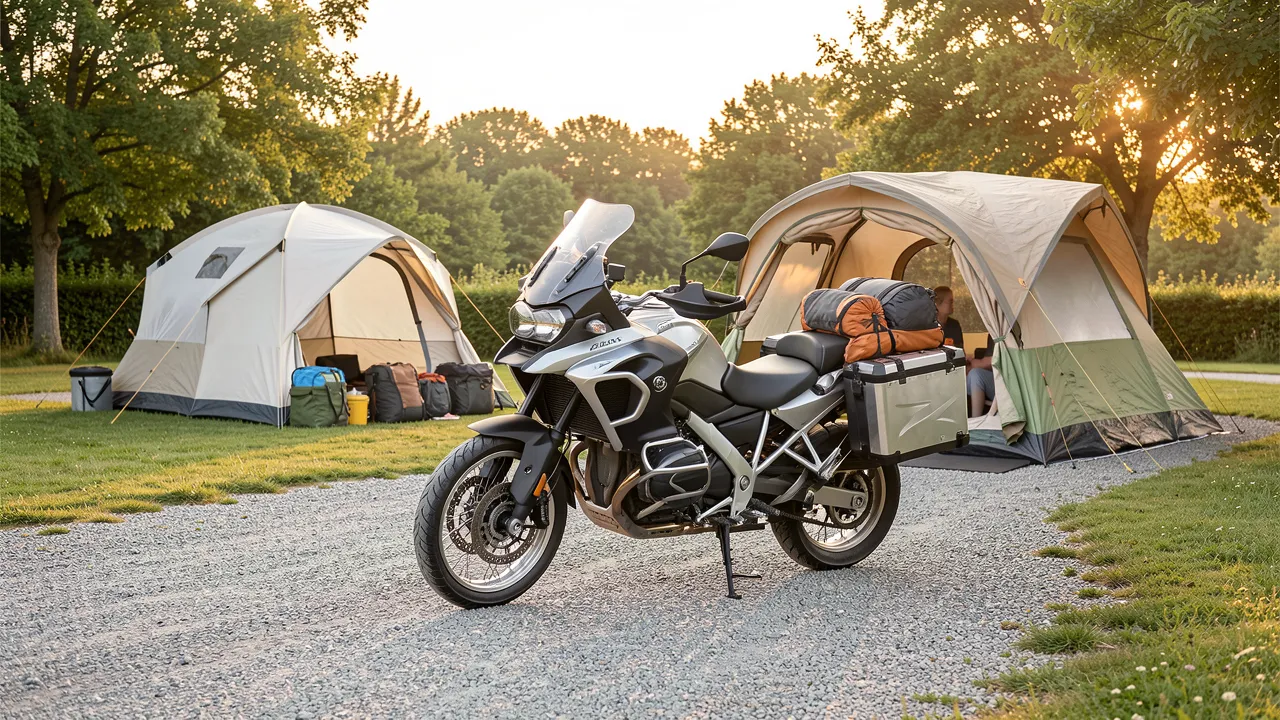
For riders, the best campsite is not necessarily the cheapest or closest to a tourist attraction. A suitable stop provides firm, level ground that can support a motorcycle, including when it is fully loaded with panniers, luggage and camping equipment. Loose gravel, soft grass and sloping pitches can turn a simple arrival into a stressful manoeuvre, especially after rain.
Caravan and motorhome travellers also look for level, well-drained pitches, although motorcycles have their own vulnerabilities. A heavy touring bike can sink into wet turf under its side stand, while a steep slope can make unloading, parking or reversing difficult. Ask whether the campsite offers hardstanding pitches, gravel areas, paved bays or a sheltered spot near reception.
Motorcycle travel resources can also help you prepare for changing road and accommodation conditions. Read the information for practical guidance related to motorcycle trips, rider equipment and touring routes. Look for advice on luggage protection, rain management, maintenance checks and suitable stops between long riding days. This preparation is particularly useful when your campsite is part of a multi-day route rather than a single destination.
Stable ground protects your bike from avoidable damage
Check photographs carefully, but do not rely on promotional images alone. Contact the campsite and ask direct questions:
- Is there a hard surface available for motorcycles?
- Is the parking area level and well drained?
- Can you park close to your tent, cabin or campsite pod?
- Are metal or plastic side-stand plates available?
- Does the access road include mud, steep gravel or deep ruts?
Carry a compact side-stand puck in your luggage. It takes little space and prevents the stand from sinking into warm asphalt, sand or wet grass. For a centre stand, a wider base plate can provide extra stability.
Security should shape your booking decision
A motorcycle is more exposed than a caravan or motorhome. It can be moved, tampered with or targeted for luggage and accessories. For that reason, secure motorcycle parking should be part of the booking conversation, not an afterthought once you arrive.
A campsite does not need to resemble a guarded hotel car park to be rider-friendly. Simple security measures can make a major difference: a barrier-controlled entrance, visible reception, lighting near pitches, cameras at access points and a parking area within sight of your accommodation. A small family-run touring park may offer a safer atmosphere than a large, anonymous site if staff know who is arriving and leaving.
Ask focused questions before you reserve
When contacting the campsite, ask whether motorcycles can be parked beside the tent or cabin. Parking close to your sleeping area allows you to monitor the bike and keep panniers away from public paths. If the site requires vehicles to use a separate car park, ask whether that area is illuminated, gated and covered by cameras.
You can also ask whether reception can store removable luggage, helmets or electronics overnight. This is useful if you are staying in a basic tent pitch and do not want to leave valuables on the motorcycle.
Bring your own layered security system. A disc lock with alarm, a chain for fixed objects where permitted, and a weatherproof cover all add protection. Avoid advertising expensive equipment by leaving GPS units, action cameras, tank bags or helmets attached to the bike.
Weather protection makes overnight stops more comfortable
Rain is part of motorcycle touring, but a campsite that helps you recover from it can transform the next riding day. Look for shelter, drainage and drying facilities, especially if you travel through coastal areas, mountains or regions with unpredictable weather.
A covered communal area, drying room, laundry space or heated washroom gives you somewhere to deal with wet gloves, boots and waterproof layers. Some rider-friendly facilities may include clotheslines, radiators, drying cabinets or electrical outlets in shared indoor areas. Confirm whether these services are available and whether they remain accessible in the evening.
If you camp under canvas, choose a pitch away from low points where water gathers. Avoid positioning your tent directly beneath trees during strong wind or heavy rain, as falling branches and constant drips can create problems. Park the motorcycle with its front wheel facing an easy exit, particularly if wet ground may become softer overnight.
Keep your riding equipment dry and organised
Separate wet gear from dry clothes as soon as you stop. Waterproof pannier liners are useful because the outer cases may leak or collect condensation. A lightweight tarp can protect luggage while you set up camp, although campsite rules may limit where you can attach or place it.
For riders using cabins, pods or static accommodation, check whether you can bring boots and riding gear inside. Some properties prefer outdoor footwear to remain in an entrance area, so a large waterproof bag can keep damp equipment contained.
Plan campsite stops around realistic riding distances
A campsite may look close on a map but still be exhausting to reach after mountain passes, ferry delays or congested roads. Plan a daily distance that leaves time for fuel, food, campsite check-in and unexpected weather. Many campsites have limited reception hours, and arriving after dark can make it harder to find your pitch or inspect the ground.
Book ahead during holiday periods, but retain some flexibility where possible. A wet forecast may make a hardstanding site more attractive than a remote grass field, while a very hot day may make shaded parking and access to water more valuable.
Check the final approach on satellite mapping. Narrow lanes may be enjoyable on an unloaded adventure bike but less pleasant on a large touring motorcycle with a passenger and full luggage. Note nearby fuel stations, supermarkets, repair shops and covered cafés before committing to a stop.
Choose stops that protect your motorcycle and your rest
A well-chosen campsite supports both the machine and the rider. Prioritise ground conditions, visible parking, weather protection and access to clean facilities over minor savings on the nightly rate. Caravan and motorhome sites often understand the value of drainage, level surfaces and practical service areas, and these features can benefit motorcycle travellers just as much.
Before confirming a reservation, remember these core checks:
- Choose hard, level and well-drained parking whenever possible.
- Ask whether the motorcycle can stay near your tent, cabin or pod.
- Check for gates, lighting, staff presence and visible security measures.
- Identify drying rooms, laundry facilities, covered areas and power access.
- Carry a side-stand puck, compact security lock and waterproof luggage protection.
- Plan arrival before reception closes and before daylight fades.
- Review the final access road, fuel options and forecast for the next morning.
Frequently asked questions about motorcycle-friendly campsites
Should you reserve a specific motorcycle pitch?
Yes, if the campsite offers hardstanding or motorcycle-suitable pitches. Mention the weight and type of your bike, particularly if you ride a large touring model. This helps staff direct you away from soft or uneven areas.
Is it safe to leave a motorcycle at a campsite overnight?
Safety depends on the site and your precautions. Choose visible, lit parking close to your accommodation, use a lock or alarm, remove valuables and ask about controlled entry or camera coverage.
What facilities are most useful after a rainy ride?
A drying room, hot showers, laundry facilities, sheltered seating and accessible power points are especially helpful. These allow you to dry gloves, boots and waterproof layers before the next day’s journey.